Weddings are easier than Year 9 drama.
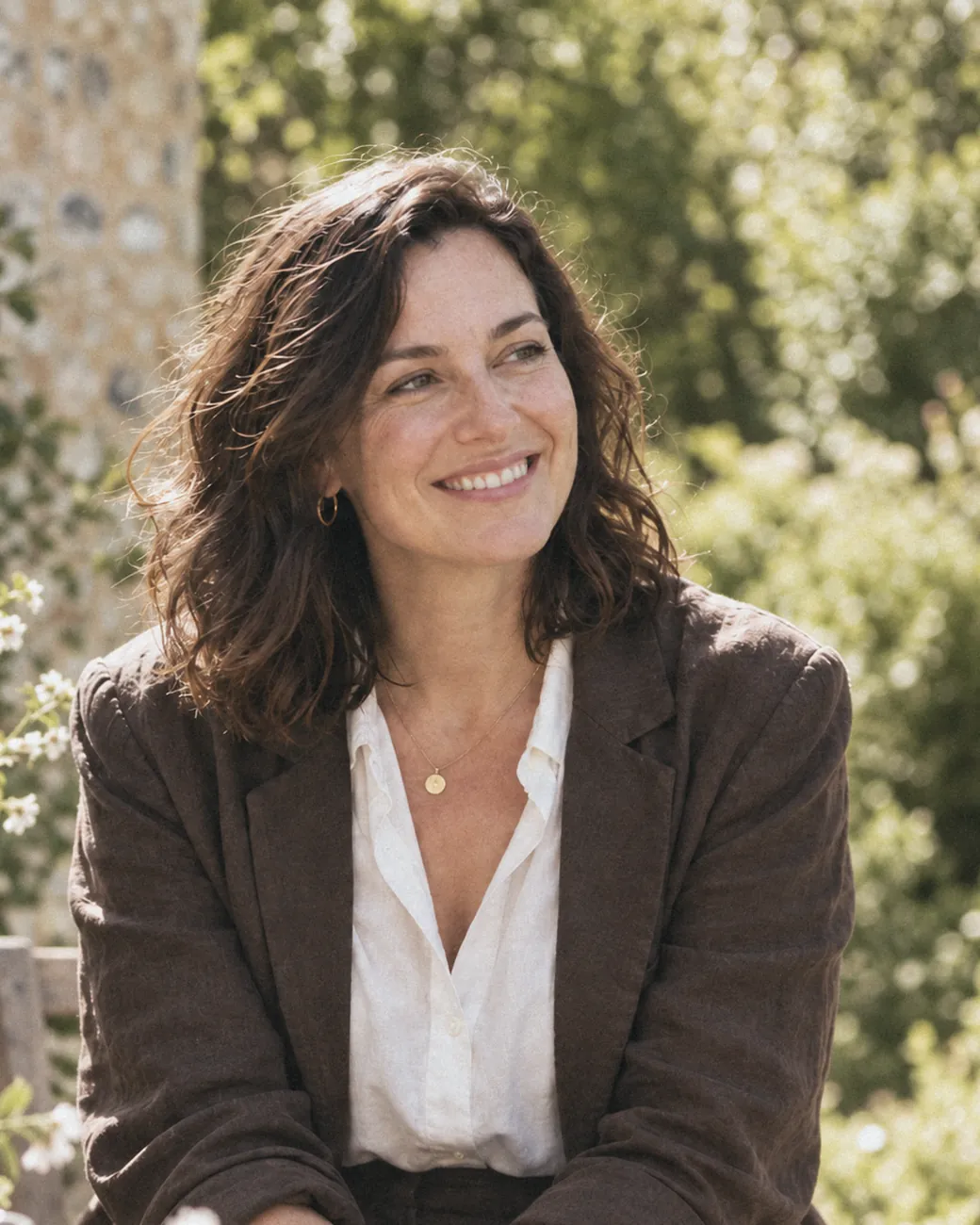
I’m Elena. Most Saturdays you’ll find me at the front of someone’s wedding, standing between two nervous people.
This is the longer version of me, so you can work out whether you’d like me at the front of your wedding.
- Taught drama in Preston for eleven years
- Married her first couple in a backyard
- Checks every name with the people who say it
How a drama teacher ends up doing this.
For eleven years I taught drama at a high school in Preston. One school musical a year, a lot of Year 9 improvisation and, whenever the tech crew had exams, the sound desk. You learn things in that job that no course teaches, like how to tell when a room is drifting, and what to do when a fifteen-year-old forgets their line in front of three hundred parents. (Keep going and cover for them.)
Then my friend Jo and her partner Mai asked if I’d marry them. They did the legal part at the registry on a Thursday, and I did the version with everyone they loved on the Saturday, in Jo’s mum’s backyard, standing on a milk crate so the back row could see. I wrote it over three weekends and read it to the dog until I could get through the funny bits without laughing. Afterwards about a dozen guests asked whether I did this for a living. I didn’t, yet. A year later I’d done the training and was registered. The milk crate is still in our shed.
I write every ceremony from a blank page. I’ve seen the template scripts, the ones with a gap for your names and another marked “how they met (two or three sentences)”, and guests can hear them within a minute. A ceremony is short. If it could be read out at anyone’s wedding, it’s wasting the only time all your people are sitting quietly in the same place.
These days I live in Northcote with my partner, our two kids (nine and twelve, and firmly of the view that weddings are mostly about cake) and Biscuit, a retired racing greyhound who runs for about forty seconds a day and sleeps through the rest of it. If we have our first chat on a video call, you may hear from any of them.
Things I’m good at.
None of these will show up in your photos, which is rather the point.
- Saying your names properly, including the ones your relatives get wrong.
- Keeping to time: about half an hour for a full ceremony, unless you’d like it longer.
- Staying calm when the rings are in the other car.
- Getting the legal paperwork right the first time.
How I write a ceremony.
Most of it happens at my kitchen table about two months out, with a pot of tea and both your answers spread out in front of me.
-
About three months out
You each answer the same questions.
I send each of you the same dozen questions and ask you not to compare notes. What did you think of them the first time you met? What do they do that nobody else notices? What are you secretly worried about on the day? At the story session I read you each other’s answers. The places your answers meet, and the places they don’t, are where the best lines come from.
What did you think of them the first time you met?
Rosa’s answerFunny. Too tall. Talked about trains for a very long time.
Tom’s answerKnew straight away. Told my sister that night.
A question from my list. Open with Tom’s. -
Before you see a draft
I read every draft out loud first.
A sentence can look lovely on paper and be impossible to say, usually because it runs out of breath halfway through. So I read the whole thing out loud with a timer going. If I trip over a line, I rewrite it, because on the day neither of us gets a second take.
-
A few weeks out
I check names with the people who say them.
If your grandmother says your name a particular way, I want to say it her way. I’ll ask you for a voice memo, or ring whoever you suggest (a parent, an aunt, your oldest friend), and write it out phonetically in the margin of my script. That goes for surnames, hometowns and the readers’ names too. I would rather ask twice than say it wrong once in front of your family.
Phrases I won’t put in your ceremony.
two soulsfairytalesoulmateswithout further adohappily ever afterpartners in crimethe next chaptera match made in heavenjourney
There’s nothing wrong with any of them. They’re just what people write when they don’t know you yet.
What couples say.
“My surname is Greek and almost everyone gets it wrong, so Elena asked for a voice memo of my mum saying it. On the day she said it perfectly, and Mum noticed straight away. She was calm and organised from the first chat to the signing, and the whole ceremony sounded like us.”
“My car got stuck behind a tram and I was twenty minutes late. Elena kept everyone relaxed, checked in with my partner, and started as soon as I arrived without making a fuss. We were so grateful for how she handled it.”
“We’re both quiet and were dreading the vows. Elena helped us write short ones we could say without shaking. Highly recommend her.”
What’s in my bag on the day.
I arrive 45 minutes early with the speaker, the signing table, two chairs and one canvas tote that has slowly turned into a small hardware shop. At some wedding, somebody needed every one of these things.

- Four pens that actually workThree certificates with five signatures on each. Pens run out, and they wander off in pockets.
- About a dozen safety pinsFor buttonholes, hems and one very memorable zip.
- Two packets of tissuesFor the front row, and sometimes for me.
- Your vows, printed outIn case a phone dies or locks halfway through.
- A second microphone, chargedSo your reader never has to lean into mine.
- A tin of mintsFor whoever skipped breakfast.
- A wooden clothes pegHolds the pages down when it’s windy.
- A small umbrellaMostly for the script, the one thing on the day that can’t get wet.
Who I’m right for, and who I’m not.
Better you find out here than halfway through our first chat.
You’ll probably get on with me if…
You want a ceremony that isn’t religious but still has room for a reading, a blessing or a song your family cares about. You’d like it to sound like the two of you, and you don’t mind a few slightly nosy questions to get there.
It’s fine if one of you would rather not say much: repeat‑after‑me vows work, and so does crying through them. And if your family is complicated, I can mention someone who isn’t there without sinking the mood.
I’m probably the wrong person if…
You need a religious service. I’m a civil celebrant, and a minister or faith leader will do that far better than me. If you want a 45‑minute ceremony, I’ll suggest some cuts first, because four readings and two songs is a lot to ask of people standing in the sun.
I don’t MC receptions, but I can recommend people who do. And if you want jokes about the ball and chain, I’ll leave those to the best man.
If you’re the first kind of couple, let’s talk.
The first chat is free and takes about an hour, in person around Melbourne or on a video call. Mention your date when you write, and I’ll check it before we pick a time.