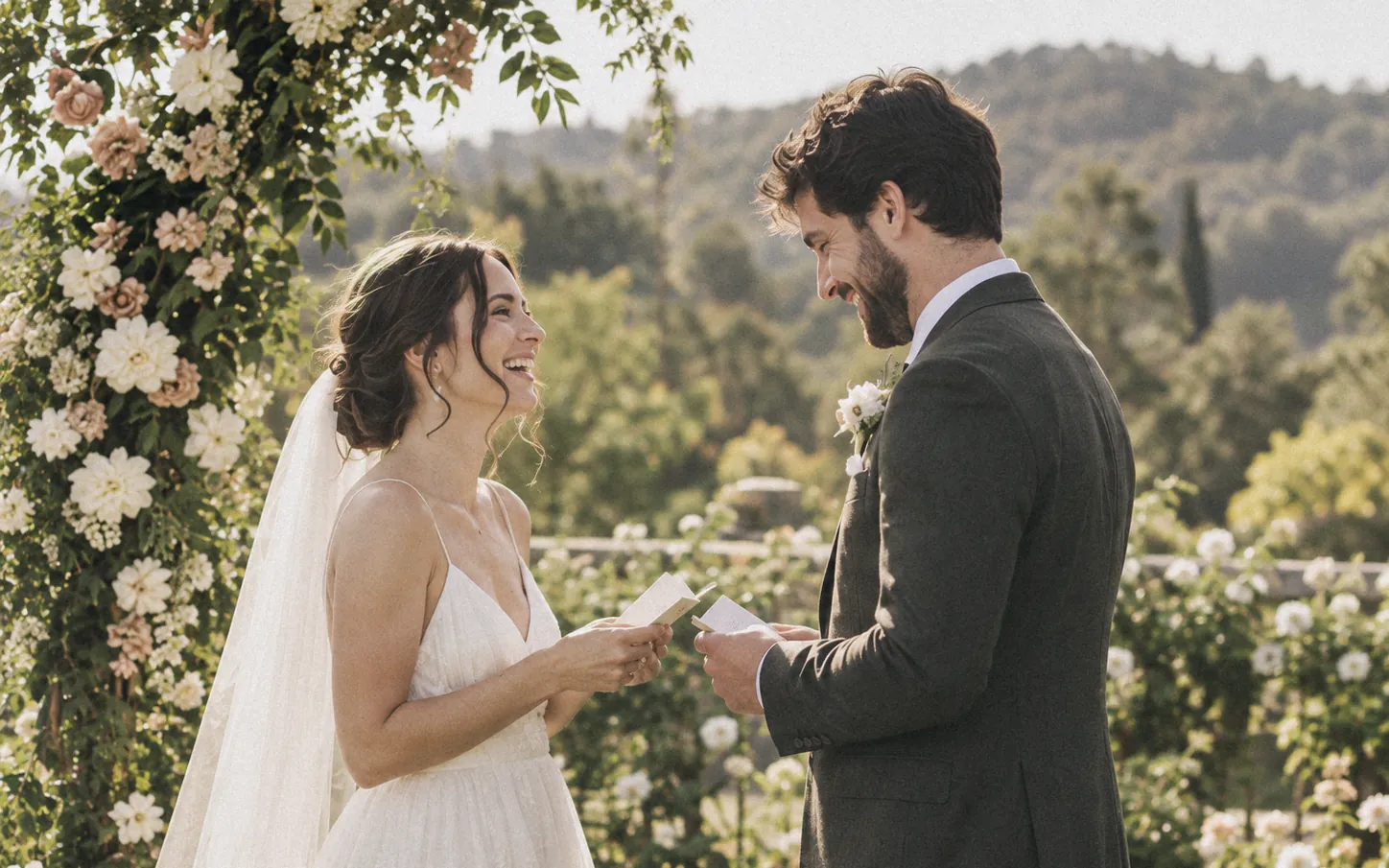
You don’t have to be good at public speaking.
About Elena Vale, marriage celebrant
Most of your day is a party. The ceremony is the part that makes it a marriage. I’m Elena Vale.
Partner, mum of two, former drama teacher, and the person who will make sure everyone hears your vows. This is how I came to the work, what I believe about marriage, and how that turns into the ceremony you’ll stand up in.
A little context
- Years teaching drama
- 11
- Working days to reply
- 2
- Minutes early on the day
- 45
- Km of travel included
- 40
At a glance
Where I sit on the scale
- FunnySeriousI lean towards funny.
- RelaxedFormalI lean towards relaxed.
- Short and sweetLong and thoroughI lean towards short and sweet.
- TraditionalModernI lean towards modern.
- SpontaneousOver-preparedI lean towards over-prepared.
- Quietly spokenHeard in the back rowI lean towards heard in the back row.
- Reads from a scriptKnows it by heartI lean towards knows it by heart.
How I got here
Eleven years of school plays turned out to be ceremony training.
Teaching drama means you run every assembly, every concert and every end-of-year show nobody else wants. You learn to stand in front of four hundred restless people and get them to listen.
It also teaches you that nerves are normal. Half my job was helping fifteen-year-olds say their lines out loud without wanting the floor to swallow them. A wedding needs the same skill: helping nervous people say what they mean, out loud, once.
When two friends asked me to marry them, I said yes before I knew what it involved. I registered, learned the law properly, and wrote their ceremony at the kitchen table. Standing in that garden, I realised I wanted to do this every weekend. A few years later I left the classroom for good, and weekends have looked like this ever since.
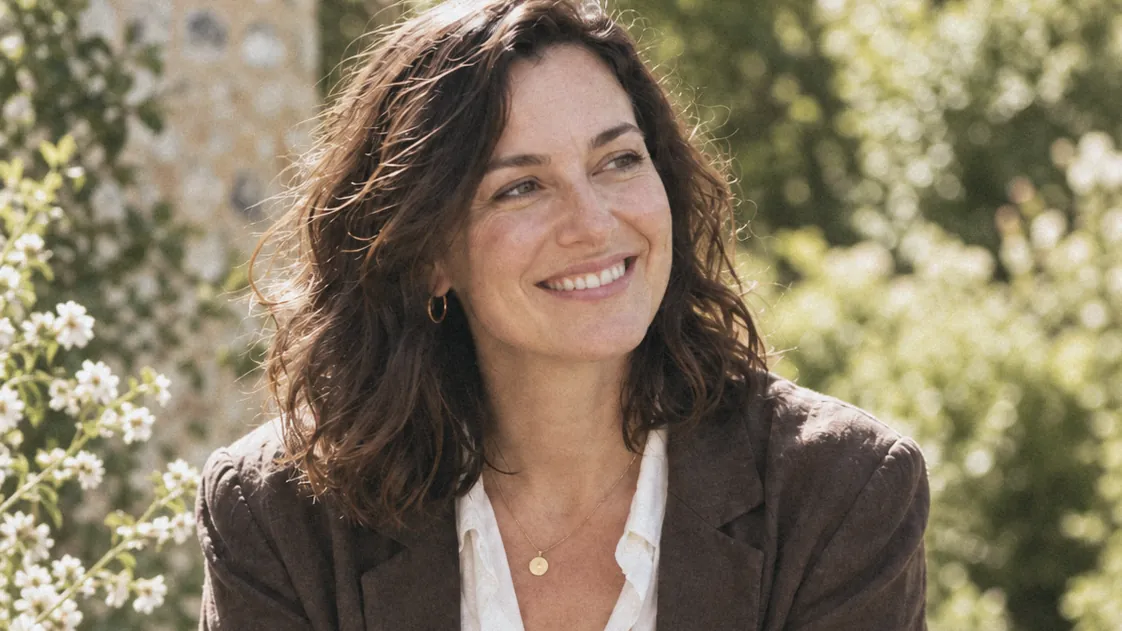
What I believe about marriage
I think a good marriage is one of the kindest things two people can build, and it deserves a proper start.
My family is big and loud. People argued at dinner and made up before dessert. I learned early that love is mostly practice: turning up, saying sorry, laughing at the same old stories and choosing each other again.
My partner and I have been together a long time now. Two kids, one greyhound, a lot of school lunches. None of it is perfect, and all of it reminds me what you’re actually promising when you stand up in front of everyone.
So I take the words seriously, even when the ceremony is funny. The legal part is short. The rest is yours, and I want it to sound like the two of you on your best and most honest day.
“The legal part is short. The rest is yours.”
What I learned early
Three things couples taught me in my first year
- 01
Your guests already know your story
Early on, I wrote ceremonies like biographies. Then I noticed the front row mouthing along to stories they’d heard a hundred times. Now I write about why you’re choosing each other and what you’re promising, and keep the story to the parts that explain that.
- 02
Nervous couples need a plan, not a pep talk
One groom told me he was dreading the vows more than the speeches. We worked out exactly where he’d stand, where the microphone would be, and that he could read from a card. He was fine. Now every couple gets that walk-through, at the rehearsal if you have one or on the day if you don’t, and a printed copy of their vows in my folder. You can read more about the legal side of the ceremony if that’s the part that worries you.
- 03
Short is a kindness
A full ceremony runs 25 to 35 minutes, and the smaller ones 15 to 20. Long enough to say something real, short enough that nobody’s shifting on a hard chair in the sun. If something doesn’t earn its place, I cut it, and I’ll tell you why.
From those lessons to your script
Your words, rehearsed until they feel easy to say.
I send you each a dozen questions, separately, and ask you not to compare notes. At our story session I read you each other’s answers. The places they meet, and the places they don’t, are where the best lines come from.
Then I write. Draft one arrives about eight weeks out, draft two about five weeks out. The third is usually the one. We read it aloud at the rehearsal, or on a video call if your ceremony doesn’t include one.
On the day, I know it well enough to look at you rather than the page. Teaching taught me to watch a room, so if your nephew starts crying or the wind picks up, I adjust without anyone noticing.
The goal isn’t a performance. It’s a ceremony that feels like the two of you, said clearly enough that your grandmother in the back row hears every word.
Away from weddings
A partner, two kids, one greyhound and a strong opinion on folding chairs.
We live in Northcote, close enough to High Street that the kids think every Saturday morning includes a bakery. Biscuit, our greyhound, sleeps about twenty hours a day and is the calmest member of the family by a wide margin.
Weekends in wedding season are busy, so weekdays are for school pick-ups, writing, and long walks along the Merri Creek trail where most of my good lines turn up.
I still get a few nerves before every ceremony. I think that’s a good sign. It means I remember this is your day, not my hundredth Saturday, and I’d rather turn up as a real person than a polished version of one.
If this feels right
Tell me how the two of you met.
We’ll work out what you want in, what you’d rather leave out, and how long you’d like it to run.
Check my availabilityWhere you’ll find me
- NorthcoteHome base
- Inner MelbourneTravel included
- Yarra ValleyQuoted before you book
- Mornington PeninsulaQuoted before you book
- The DandenongsQuoted before you book
- Further afieldAsk me