The hillside garden.
A garden that moves with the land, making a sequence of places from a sloping site.
- Setting
- Open rural slope
- Design focus
- Movement, levels & planting
- Material palette
- Rough stone, gravel & grasses
- Project type
- Illustrative garden study
Follow the ground.
Find the pauses.
Turn a change in level into a way to experience the garden.
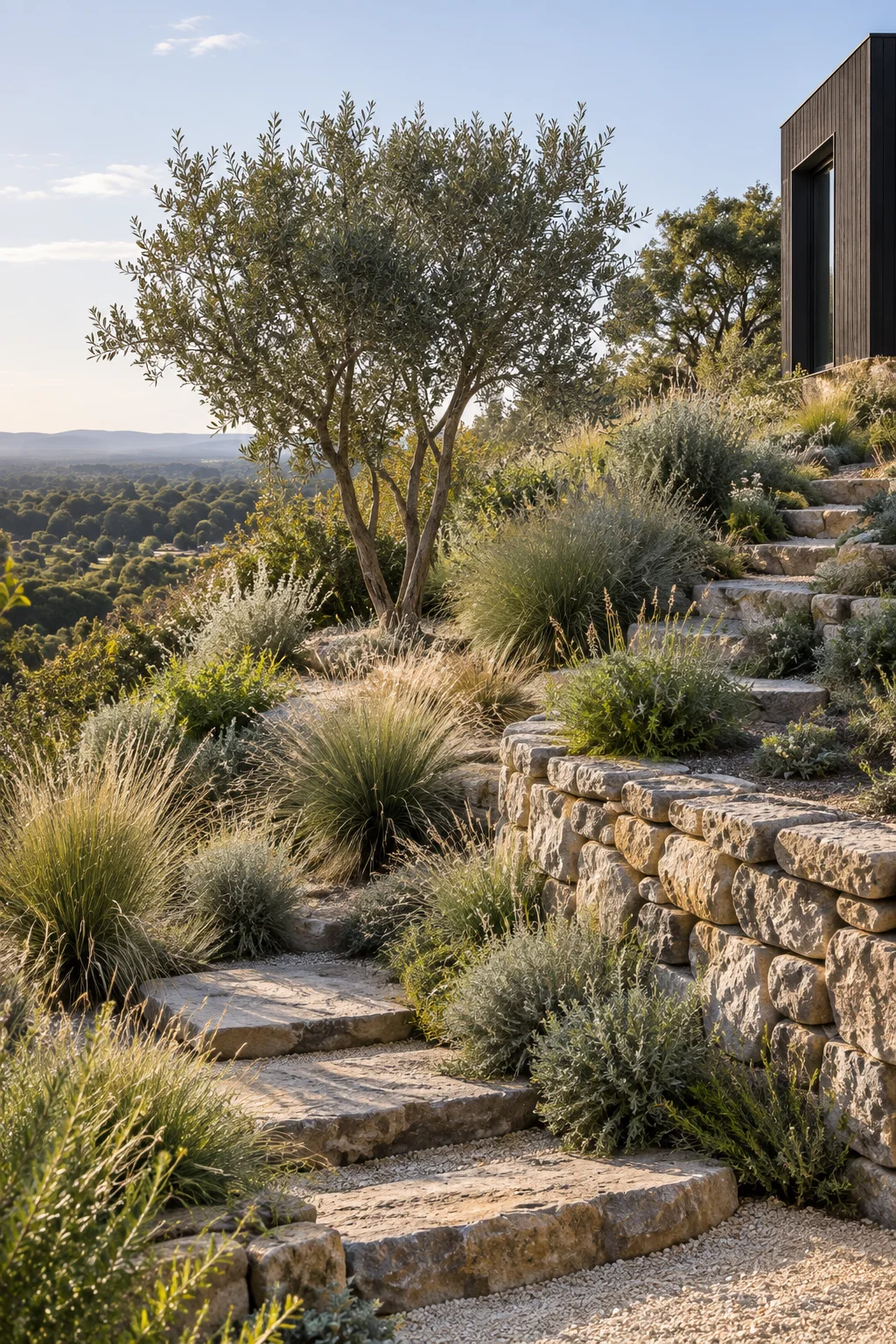
The hillside study imagines a sloping site beside a modest timber home. The brief asks for a garden that feels settled in the wider landscape, with a clear route between the house and the lower garden.
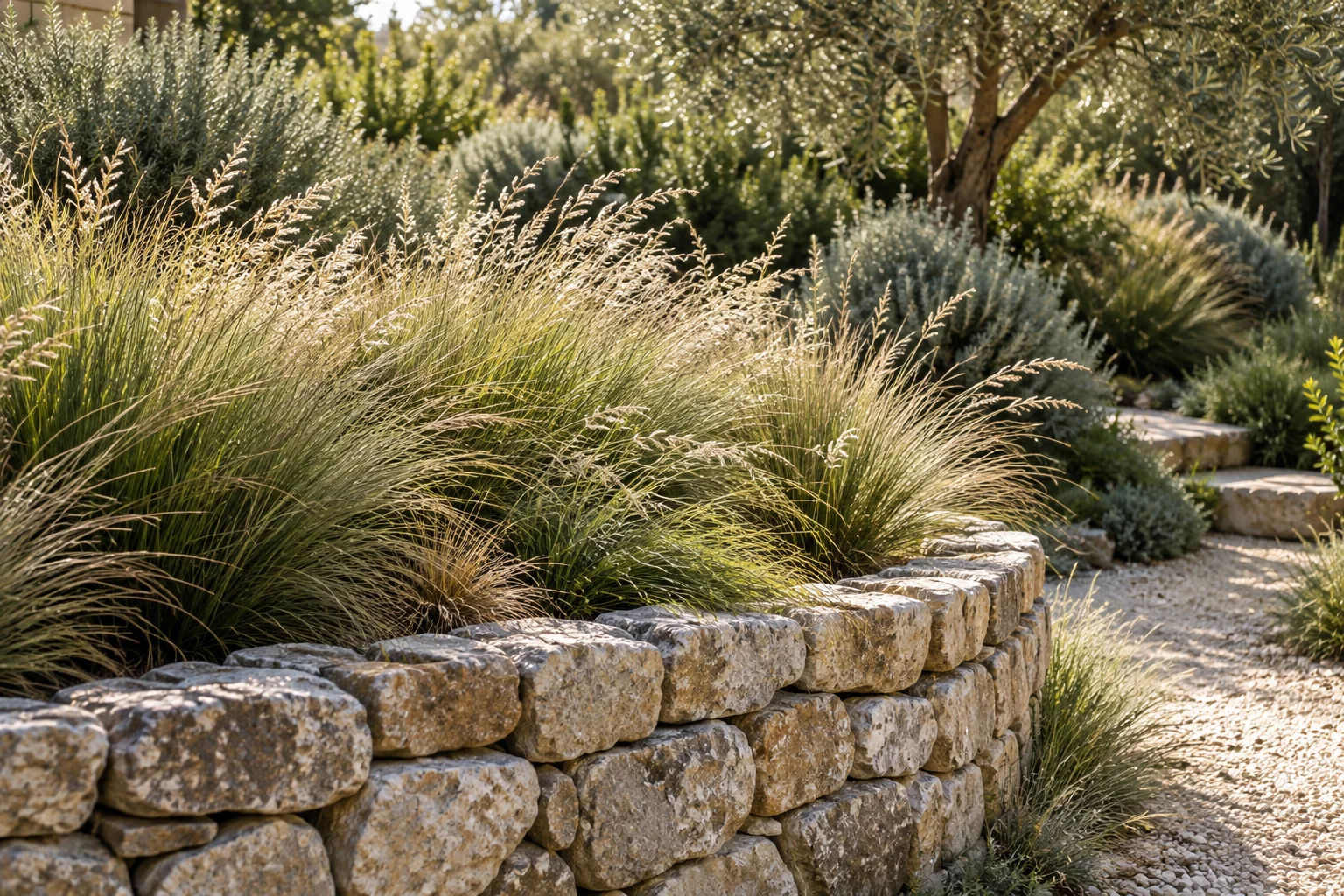
Rather than treating the slope as one large problem to flatten, the study creates smaller changes of level. Rough stone walls hold planting pockets, gravel landings offer places to pause, and grasses help the built edges belong to the setting.
The way through
is part of the garden.
The path is more than a connection between two points. Its direction determines which views open up, where planting is seen at eye level and where someone might choose to stop.
Landings allow a moment to take in the wider landscape. Closer to the house, planting becomes more contained and the hard surfaces more generous. Farther away, the arrangement loosens.
Resolve the ground first.
A real sloping-site project needs measured levels, a drainage strategy and advice about retaining structures. Step geometry, edge protection and an alternative route for different mobility needs belong in the early brief.
This illustrative image expresses a spatial idea. It is not a construction detail or a statement that the pictured steps meet access requirements.
Make structure
feel natural.
| Element | Design role |
|---|---|
| Rough limestone | Gives the slope a readable structure. Height, foundations and drainage would be designed for the actual conditions. |
| Pale gravel | Offers a lighter surface between planted areas. Its suitability depends on gradient, use and containment. |
| Layered grasses | Soften the edges and bring movement. Plant choices need to suit the local site and available care. |
| A sculptural tree | Provides a point of reference in the wider view, with mature size and growing conditions considered from the start. |
Plan for the
garden you will tend.
A hillside can make simple maintenance more demanding. Before planting, think about where tools will be kept, how water will reach new plants and how a person will move safely through the beds.
The brief should identify the areas that will be tended regularly and the areas intended to feel more natural. Neither should be described as maintenance-free.
Staging may help: establish access and essential ground works first, then develop planting zones in a sequence that suits the site and the available resources.
Bring this idea into your briefWhat could your
garden become?
A thoughtful garden starts with a conversation. Tell us a little about your space, how you use it and what you’d love it to become.
Start your garden brief